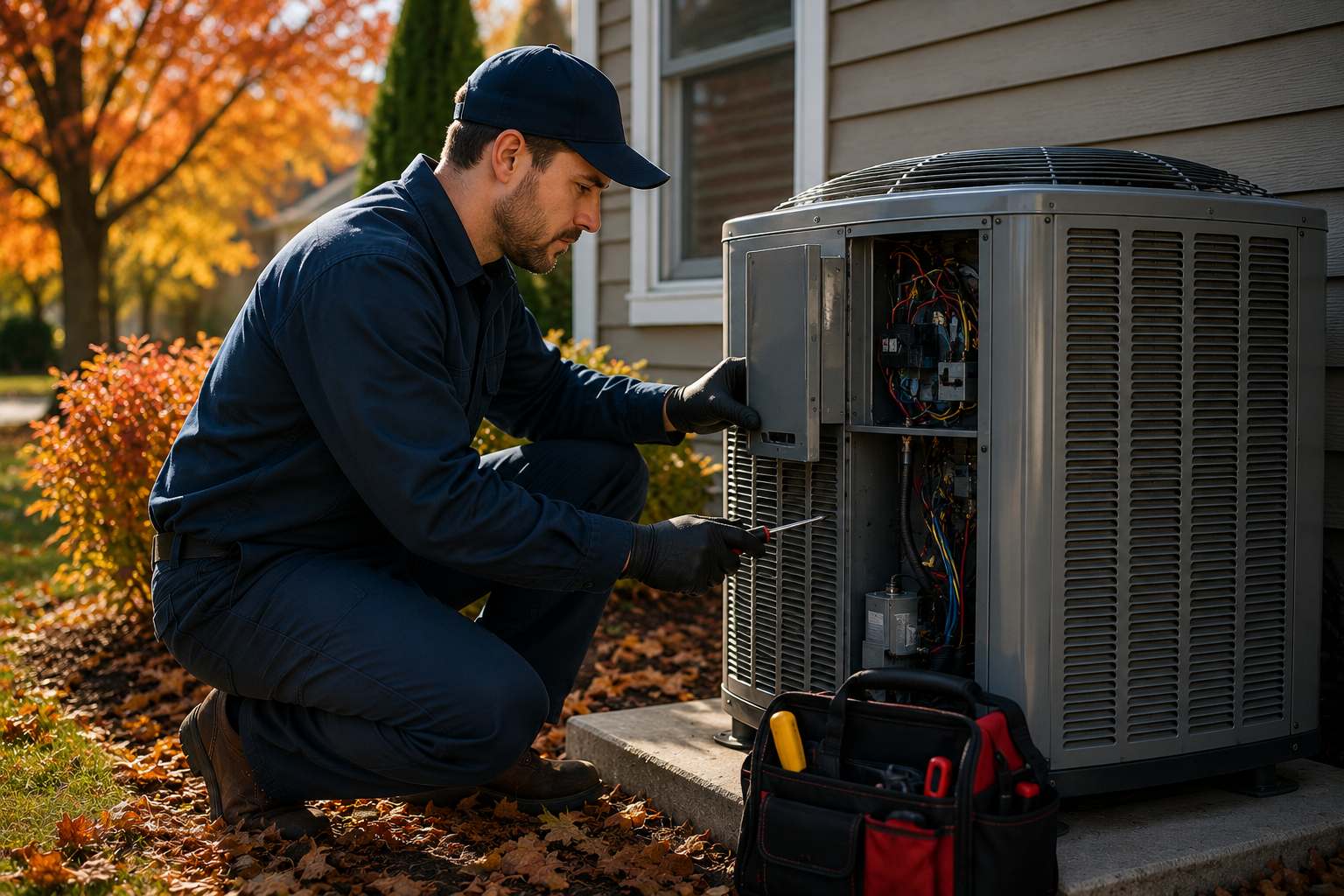
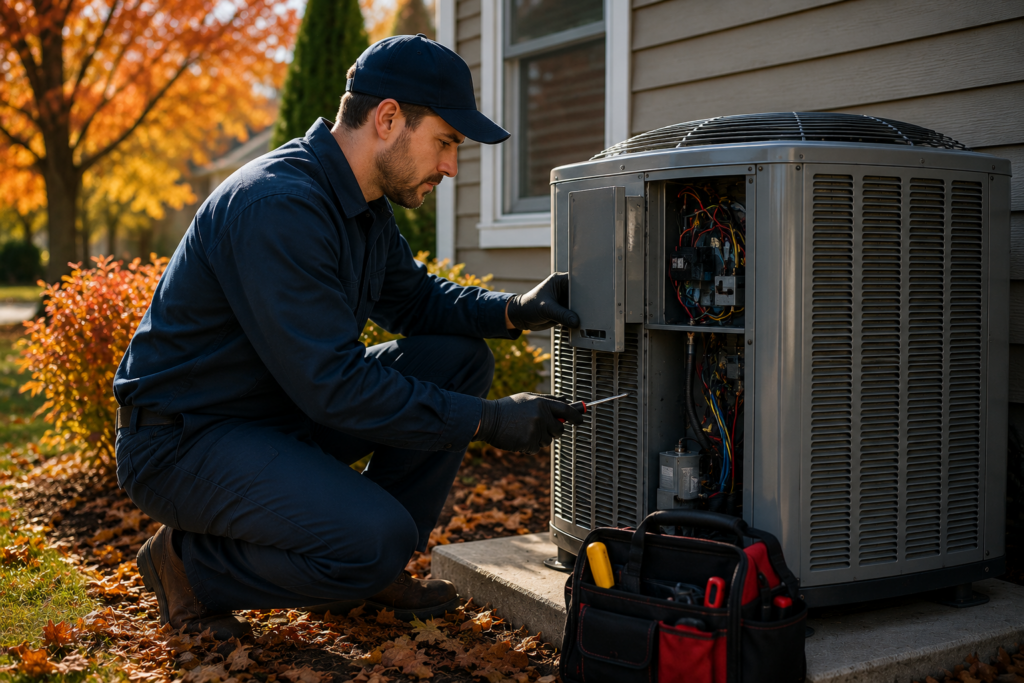
Fall in North Texas does not always feel much like fall. Your air conditioner may still be running well into September and October, even as cooler mornings begin to appear.
That transition makes fall a useful time to give your HVAC system some attention.
After months of heavy summer use, fall HVAC maintenance can help identify developing problems while also preparing your heating system for the cooler weather ahead.
Your AC Just Finished Its Hardest Season
Texas summers put tremendous demand on cooling equipment.
By fall, your air conditioner may have spent months operating for hours every day. Components can wear, filters become dirty, drain lines accumulate buildup, and small problems may begin developing without causing an obvious breakdown.
A post-summer inspection can help identify those issues before your system sits mostly unused through winter.
Your Heating System Has Been Sitting for Months
At the same time, your heating equipment probably has not operated regularly since the previous winter.
Before you depend on it during the first cold snap, it makes sense to confirm that everything is working properly.
Depending on your system, seasonal maintenance may include checking:
- Electrical connections
- Thermostat operation
- Air filters
- Blower components
- Heating operation
- Safety controls
- Airflow
- Overall system performance
The goal is not simply to make the heat turn on. It is to make sure the system is ready to operate safely and reliably when you need it.
Fall Weather Gives You More Flexibility
One advantage of scheduling HVAC maintenance during mild weather is that you are not dealing with an emergency.
If a technician discovers a worn component or another issue, you generally have more time to consider your options and schedule the appropriate service.
That is a much better situation than discovering the same problem when temperatures suddenly drop and everyone in DFW turns on their heat at the same time.
Maintenance Can Help With Efficiency
A system that is clean and operating properly does not have to work as hard to maintain your home’s temperature.
Routine HVAC maintenance can help:
- Maintain efficient operation
- Improve airflow
- Reduce unnecessary system strain
- Identify worn components
- Lower the risk of unexpected breakdowns
- Extend equipment life
Maintenance cannot prevent every repair, but it can help catch many common problems before they become more serious.
Don’t Forget the Air Filter
Fall is also a good time to check your HVAC filter.
A dirty filter restricts airflow whether you are cooling or heating your home. Depending on the filter, household conditions, pets, and system use, most filters should be inspected regularly and replaced when dirty.
Starting the heating season with a clean filter is one of the easiest things you can do for your HVAC system.
Do You Need HVAC Maintenance Twice a Year?
For many North Texas homes, having the HVAC system inspected in the spring and fall provides a practical schedule.
Spring service prepares the cooling system for summer. Fall service checks the system after cooling season and prepares the heating equipment for winter.
Your equipment, manufacturer recommendations, and system age may affect the ideal maintenance schedule for your home.
Get Your HVAC System Ready for the Season Ahead
Fall HVAC maintenance is less about reacting to a problem and more about knowing your system is ready for whatever Texas weather brings next.
Moore Than Air helps homeowners throughout Bedford and the DFW area maintain reliable heating and cooling systems year-round. A seasonal inspection can help identify developing issues, maintain performance, and give you greater confidence heading into cooler weather.
Contact us today to learn more!